Hair loss at Norwood 5 and 6 represents some of the most extensive balding on the Hamilton-Norwood scale, with the frontal and crown regions merging into a single large area of thinning or complete baldness. For men at these stages, the question of whether full coverage is achievable through hair transplantation is deeply personal and often loaded with conflicting information. The honest answer is nuanced: true full coverage, meaning the same density you had at 18, is almost never possible with a single procedure. But meaningful, natural-looking restoration that transforms your appearance? That is absolutely within reach, provided the surgical plan accounts for donor limitations, graft distribution, and long-term hair loss progression.
The difference between a disappointing result and a life-changing one at these advanced stages comes down to surgical strategy, honest expectations, and the expertise of the team performing the work. A Norwood 5 or 6 patient who walks in expecting 80 grafts per square centimeter across the entire scalp will be let down. A patient who understands that strategic density, smart hairline design, and possibly multiple sessions can produce a convincing result will walk away satisfied. This article breaks down exactly what’s involved: the graft math, the donor constraints, the techniques that make advanced restoration possible, and the timeline you should realistically plan for.
The Reality of Norwood 5 and 6 Hair Loss Patterns
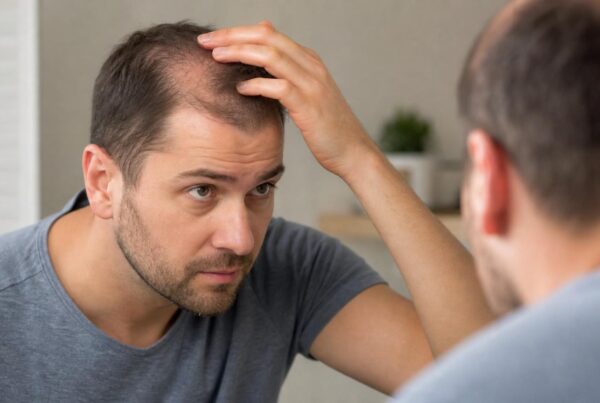
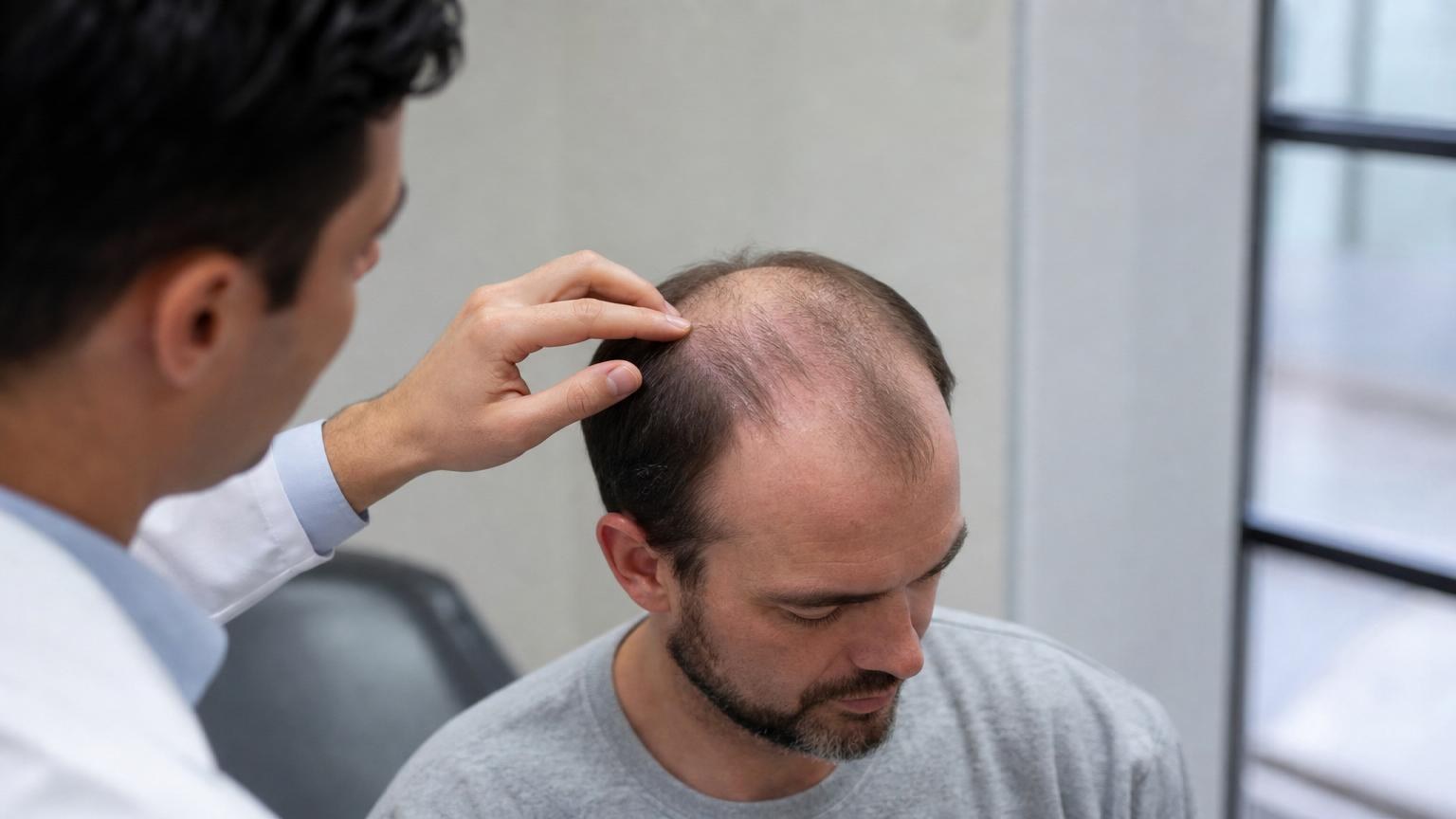
Norwood 5 and 6 represent the upper end of progressive male pattern baldness. At Norwood 5, the strip of hair separating the frontal recession from the crown thinning has narrowed significantly, sometimes to just a thin bridge. By Norwood 6, that bridge is gone entirely, leaving a large horseshoe-shaped fringe of hair around the sides and back of the head. The total bald area at these stages can measure anywhere from 200 to 300 square centimeters, which is a massive canvas to cover with a finite number of donor follicles.
What makes these stages particularly challenging is not just the size of the recipient area but the contrast between the bald scalp and the remaining fringe. The visual impact of baldness at Norwood 5 and 6 is dramatic, which means even partial restoration can produce a striking improvement. Understanding the classification and characteristics of each Norwood stage is the first step toward setting realistic goals and building a surgical plan that accounts for both current loss and future progression.
Defining Norwood 5 and 6 Hair Transplant Challenges
The primary challenge of a Norwood 5 hair transplant or Norwood 6 procedure is simple math. A typical scalp contains roughly 80,000 to 100,000 hairs in total. The safe donor zone, the permanent horseshoe of hair resistant to DHT-driven miniaturization, usually holds between 6,000 and 8,000 extractable grafts via FUE, or slightly more with FUT strip harvesting. At Norwood 6, the recipient area demanding coverage can exceed 250 cm², which means you’d need upwards of 10,000 to 12,500 grafts to achieve even moderate density of 40 to 50 grafts per cm² across the entire zone.
That gap between supply and demand is the central problem. Patients at advanced Norwood stages face a higher risk of depleting their donor reserves if the surgical plan is too aggressive in a single session. Over-harvesting the donor area leads to visible thinning on the sides and back of the head, trading one cosmetic problem for another. A skilled surgeon will refuse to extract beyond safe limits, even if the patient requests maximum coverage.
The second challenge is ongoing hair loss. A 35-year-old at Norwood 5 may progress to Norwood 6 or 7 over the following decade. Any transplant plan must account for this trajectory, reserving grafts for future touch-ups and designing the hairline at a mature, age-appropriate position rather than an aggressively low one that will look unnatural as surrounding native hair continues to thin.
Donor Area Assessment: The Key to Full Coverage
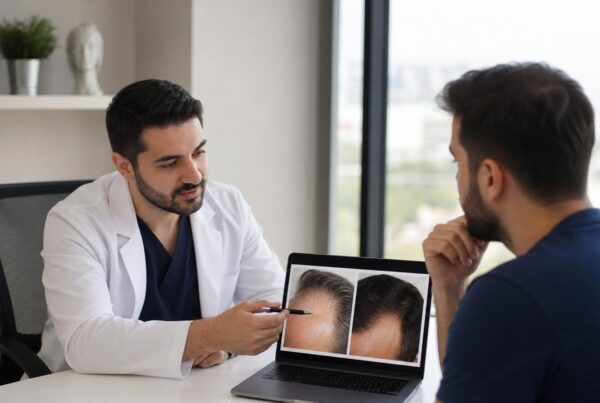
Before any graft count is discussed, the donor area must be thoroughly evaluated. This assessment determines everything: how many grafts can be safely harvested, whether FUE or FUT (or a combination) is the better extraction method, and whether supplementary sources like beard or body hair are viable.
A proper donor evaluation includes measuring hair density in the occipital and temporal regions using a densitometer. Average donor density ranges from 65 to 100 follicular units per cm², and the safe extraction zone typically spans about 150 to 200 cm². Hair caliber matters enormously: thick, coarse hair provides far more coverage per graft than fine hair. A patient with coarse, wavy hair and a donor density of 90 FU/cm² has a dramatically different ceiling than someone with fine, straight hair at 65 FU/cm².
Scalp laxity also plays a role, particularly for FUT candidates. A loose scalp allows a wider strip to be harvested, potentially yielding 3,000 to 4,000 grafts in a single session. For FUE, the surgeon evaluates the donor zone for signs of miniaturization, which can extend into the “safe” zone in some patients, making those follicles unreliable for long-term transplantation. Clinics with extensive experience in advanced cases, such as Estenove in Istanbul, typically perform this evaluation using both macro photography and microscopic analysis to map the donor area precisely before committing to a surgical plan.
How Many Grafts are Required for Norwood 5 and 6?
The graft numbers for Norwood 5 and 6 restoration are among the highest in hair transplant surgery. General estimates place the requirement at 4,000 to 6,000 grafts for Norwood 5 and 6,000 to 8,000+ grafts for Norwood 6, though these figures vary based on head size, desired density, and hair characteristics. These numbers often exceed what can be safely extracted in a single session, which is why multi-session planning is standard at these levels.
The goal is not to replicate pre-balding density everywhere. Instead, the surgeon distributes grafts to create the strongest visual impact: a well-defined frontal hairline, adequate mid-scalp coverage, and enough crown work to eliminate the “bald spot” appearance. Strategic thinning of the graft distribution from front to back mimics natural hair growth patterns, where density naturally decreases toward the vertex.
Graft Calculation for the Frontal Hairline and Crown
Breaking down the graft budget by zone helps illustrate how surgeons approach a Norwood 5 or 6 case:
- Frontal hairline and forelock: 1,500 to 2,500 grafts. This zone gets the highest density because it frames the face and has the greatest visual impact. Surgeons typically place 45 to 60 grafts per cm² here, using single-hair grafts at the very front for a natural, feathered appearance.
- Mid-scalp transition zone: 1,500 to 2,000 grafts. This area bridges the hairline to the crown and requires moderate density of 30 to 40 grafts per cm² to maintain a natural gradient.
- Crown/vertex: 1,000 to 2,500 grafts. The crown is the most difficult area to cover convincingly because hair grows in a whorl pattern, and the visual angle means observers look directly down at the scalp. Many surgeons recommend conservative crown coverage, reserving grafts for the front where the payoff is greater.
A Norwood 6 patient with a large head circumference might need the upper end of all these ranges, pushing total graft needs past 7,000. For patients with fine hair or low donor density, the realistic graft count may cap closer to 5,000 to 6,000, requiring creative distribution to maximize visual impact.
The Multi-Session Approach for Maximum Density
Single-session mega-sessions of 4,000 to 5,000 grafts via FUE are possible in 2026, but for Norwood 5 and 6 patients who need 6,000+ grafts, splitting the work across two or three sessions spaced 10 to 14 months apart is often the smarter approach.
The first session typically prioritizes the frontal third of the scalp, establishing the hairline and forelock. This area grows in first and provides the most immediate cosmetic improvement. The second session addresses the mid-scalp and crown, and a potential third session can add density to areas that appear thin once the initial grafts have matured.
This staged approach offers several advantages. It allows the donor area to recover between extractions, reducing the risk of over-harvesting. It also lets the surgeon assess how the first round of grafts grew before planning the next phase, adjusting density targets based on actual results rather than projections. Patients should expect each session to require 8 to 12 hours of procedure time, with visible growth beginning around months 4 to 6 and full maturation at 12 to 18 months post-op.
Achieving Realistic Results with Advanced Techniques
The 2025 ISHRS Practice Census data confirms that FUE remains the dominant extraction method globally, with an increasing number of clinics incorporating hybrid approaches that combine FUE with body hair transplantation for patients with limited scalp donor reserves. For Norwood 5 and 6 candidates, these advanced techniques can be the difference between partial and near-complete coverage.
The question of whether full coverage is truly possible at Norwood 5 and 6 depends on how you define “full.” If full means indistinguishable from a Norwood 1 scalp under bright lighting, the answer is no for most patients. If full means a natural-looking head of hair that eliminates the appearance of baldness in everyday situations, the answer is a qualified yes, provided the surgical strategy is sound.
Utilizing Body Hair and Beard Grafts for Extra Volume
When scalp donor reserves are insufficient, beard and body hair grafts can supplement the total graft count by 1,500 to 3,000 additional follicles. Beard hair is particularly valuable: it’s thick, coarse, and grows as single-hair follicular units, making it ideal for adding bulk to the crown and mid-scalp where density matters more than fine detail.
Beard grafts are typically harvested from the submental area (under the chin) and along the jawline. The extraction process is similar to scalp FUE but requires adjusted punch sizes, usually 0.8mm to 0.9mm, due to differences in skin thickness and follicle angle. Chest hair can also be used, though it tends to be finer and has a shorter growth cycle, making it less reliable for long-term density.
The key limitation of body hair transplantation is that these grafts behave differently from scalp hair. They grow at different rates, have different textures, and may not blend perfectly at the hairline. For this reason, body hair grafts are best reserved for interior zones where they add volume without being individually scrutinized. A well-planned Norwood 5 restoration uses scalp grafts for the hairline and frontal zone while deploying beard grafts behind them for fill.
Strategic Graft Placement: Illusion of Density vs. Total Coverage
One of the most important concepts in advanced hair restoration is the difference between actual density and perceived density. The human eye does not count individual hairs: it registers overall coverage, shadow, and contrast. A skilled surgeon exploits this by placing grafts at angles and distributions that maximize the visual appearance of fullness, even at lower-than-natural density.
Techniques that enhance perceived density include:
- Angling grafts at 10 to 15 degrees to lay flat against the scalp, creating more shadow and coverage per follicle
- Placing multi-hair grafts (2 to 3 hairs each) in the mid-scalp and crown while reserving singles for the hairline
- Staggering graft placement in an irregular pattern that mimics natural growth rather than uniform rows
- Prioritizing the frontal third, where even 50 grafts per cm² creates a strong frame that makes the entire head appear fuller
Patients with dark hair and light skin face the toughest contrast challenge, as every gap between follicles is visible. For these individuals, scalp micropigmentation (SMP) between transplanted hairs can dramatically enhance the appearance of density. SMP deposits tiny pigment dots on the scalp that mimic the look of shaved hair follicles, filling in the visual gaps between transplanted grafts. The combination of transplanted hair and SMP is one of the most effective strategies for Norwood 6 patients who cannot achieve sufficient density through grafting alone.
Long-Term Management and Expectations for Severe Hair Loss
A hair transplant at Norwood 5 or 6 is not a one-and-done event. It’s the beginning of a long-term management plan that includes medical therapy, possible follow-up procedures, and ongoing monitoring of both the transplanted and native hair.
Finasteride (1mg daily) or dutasteride (0.5mg daily) remains the frontline medical therapy for slowing further loss. Patients who respond well to these medications can preserve their remaining native hair for years, reducing the need for additional grafting. Minoxidil (5% topical, applied twice daily) supports blood flow to the scalp and can improve the caliber of miniaturizing hairs. Low-level laser therapy (LLLT) devices offer a non-pharmaceutical option with modest evidence supporting their use as an adjunct treatment.
Tracking your results over time is essential. Take monthly photographs of your hairline, crown, and donor area under consistent lighting, using the same camera angle and distance each time. This creates an objective record that helps both you and your surgeon assess growth trajectory and plan any future sessions. Most patients see initial sprouting at months 3 to 4, noticeable improvement by month 6, and final density at 12 to 18 months.
The realistic results for Norwood 5 and 6 patients who commit to a multi-session plan with medical therapy are genuinely impressive. The average cost of hair transplant procedures varies significantly by region, with Turkey offering some of the most competitive pricing for high-graft-count cases without compromising on technique. Patients should budget not just for the initial procedure but for follow-up sessions, medications, and potential SMP enhancement.
Expect the final outcome to deliver 35 to 50 grafts per cm² across most of the scalp, with higher density at the hairline. This won’t replicate teenage hair, but it will eliminate the horseshoe pattern, restore a natural frame to your face, and give you the ability to style your hair with confidence. The patients who achieve the best outcomes are those who approach the process with patience, realistic expectations, and a willingness to follow through on the full treatment plan rather than expecting a single surgery to solve everything.
Your hair loss didn’t happen overnight, and the best restoration results don’t either. But with the right surgical team, a sound multi-session strategy, and disciplined follow-through on medical therapy, Norwood 5 and 6 patients in 2026 have more options and better outcomes than at any previous point in the history of hair restoration.