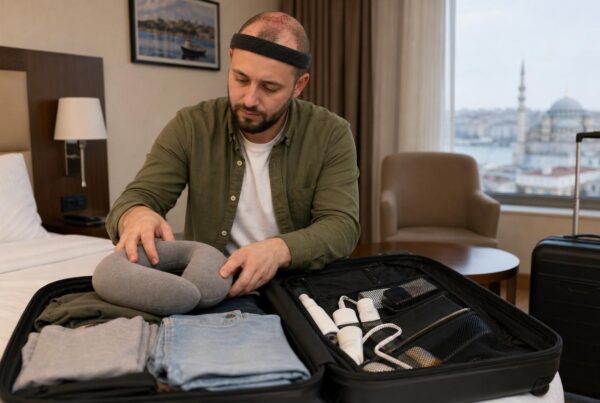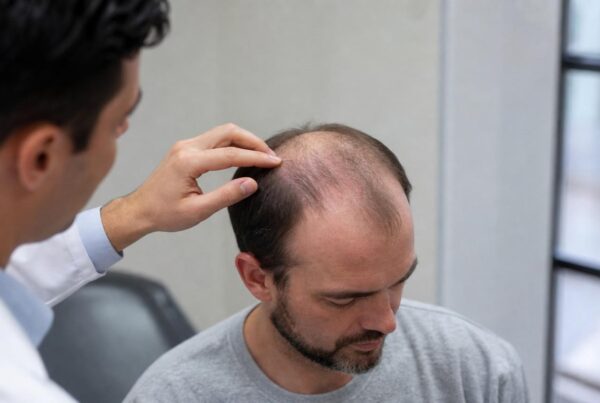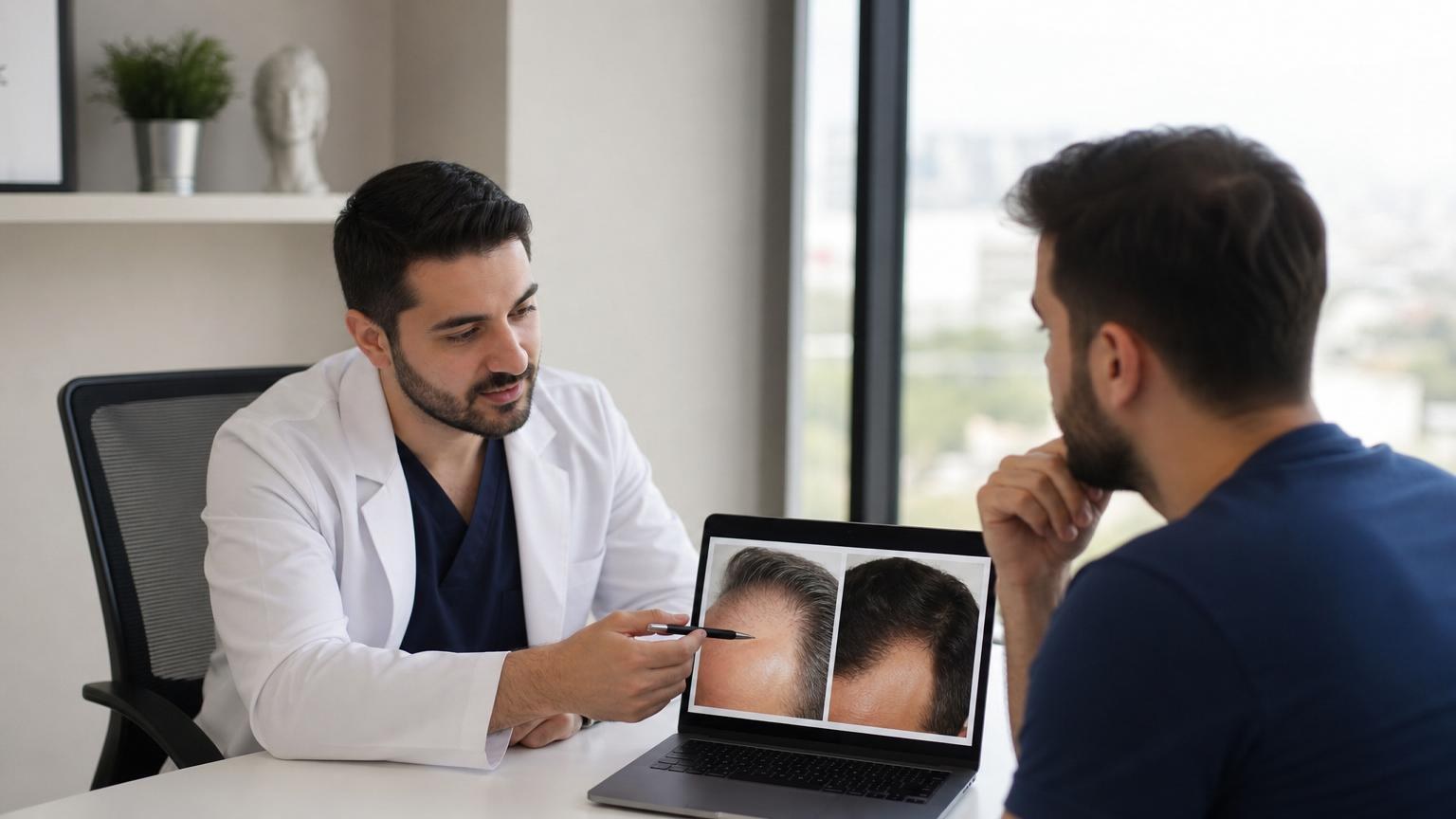
Turkey performs over 700,000 hair transplant procedures annually, and the country’s medical tourism sector has grown into a multi-billion-dollar industry fueled largely by hair restoration. That volume means patients have hundreds of clinics to choose from, but it also means the gap between the best and worst facilities is enormous. Some clinics employ board-certified surgeons who personally extract and implant every graft. Others run assembly-line operations where unlicensed technicians handle the entire procedure while a doctor’s name appears only on the paperwork. Knowing how to choose a hair transplant clinic in Turkey is the single most important factor in whether you walk away with a natural-looking result or a costly regret. The criteria below will give you a concrete framework for separating world-class clinics from those that cut corners.
Essential Criteria for Selecting a Top-Tier Turkish Clinic
Understanding Medical Certifications and Accreditation Standards
The first filter is non-negotiable: the clinic must hold valid accreditation from a recognized health authority. In Turkey, the Ministry of Health regulates hair transplant facilities, and since 2023, stricter regulations require that procedures be performed only in licensed hospitals or certified medical centers, not hotel rooms or unlicensed offices. Any clinic operating outside this framework is breaking Turkish law, and you should treat that as an immediate disqualification.
Beyond the national license, look for international accreditation from bodies like the Joint Commission International (JCI). JCI-accredited hospitals in Turkey undergo rigorous audits of their infection control protocols, surgical equipment, anesthesia standards, and patient safety systems. Istanbul alone has more JCI-accredited hospitals than most European capitals, so this is not an unreasonable bar to set.
Ask the clinic directly for their accreditation certificates. A reputable facility will share these without hesitation, often displaying them on their website. If a clinic deflects or provides vague answers about their licensing status, that tells you everything you need to know.
You should also verify the clinic’s standing with Turkey’s provincial health directorates. These bodies maintain registries of approved medical tourism facilities, and a quick check can confirm whether a clinic is operating within legal boundaries. The Turkish medical tourism market has been valued at over $2.5 billion, and with that scale comes both legitimate excellence and opportunistic operators looking to profit from uninformed patients.
Evaluating the Quality of All-Inclusive Treatment Packages
Most Turkish clinics offer all-inclusive packages that bundle the procedure with airport transfers, hotel stays, medication, and follow-up consultations. These packages typically range from $2,000 to $5,000 for FUE procedures, with average costs sitting around $2,000 to $4,000 depending on the technique and graft count. That price point is roughly 60-70% lower than comparable procedures in the UK or the US, which is what draws patients to Turkey in the first place.
But price alone is a terrible way to evaluate a clinic. Here is what a genuinely comprehensive package should include:
- Pre-operative blood tests (CBC, coagulation panel, infectious disease screening)
- A detailed consultation with the operating surgeon, not just a patient coordinator
- The procedure itself, including all anesthesia and medical supplies
- A minimum of one night in a 4-star or higher hotel, ideally in proximity to the clinic
- Post-operative medications: antibiotics, anti-inflammatory drugs, a PRP session, and a specialized washing kit
- A clearly defined follow-up schedule extending 6-12 months after the procedure
- Emergency contact access to the medical team during the first 72 hours post-surgery
If a package omits any of these elements, ask why. Some clinics advertise rock-bottom prices by stripping out PRP sessions, using lower-quality accommodation, or limiting follow-up to a single check-in. The cheapest option is almost never the best value. A package priced at $1,500 that skips blood work and post-op care will cost you far more if complications arise.
Pay particular attention to the graft count promised. Some clinics guarantee 5,000 or even 6,000 grafts regardless of your donor area capacity. An ethical surgeon will never promise a specific number before examining your scalp density, hair caliber, and donor supply. Overharvesting the donor area leads to visible thinning at the back and sides of your head, a problem that is nearly impossible to fix.
How to Verify the Surgeon and Medical Team Expertise
Checking Professional Backgrounds and ISHRS Memberships
The surgeon’s credentials are the single strongest predictor of your outcome. Start by confirming that the lead surgeon is a licensed medical doctor registered with the Turkish Medical Association. Their specialty should be dermatology, plastic surgery, or a related field with specific training in hair restoration.
Membership in the International Society of Hair Restoration Surgery (ISHRS) is a strong positive signal. The ISHRS maintains strict admission criteria, requires ongoing education, and holds members to ethical standards that prohibit ghost surgery and misleading advertising. Not every excellent surgeon is an ISHRS member, but the absence of any professional society affiliation should prompt deeper questioning.
Cross-reference the surgeon’s name on the ISHRS member directory, which is publicly searchable. Check their publication history on PubMed or Google Scholar. A surgeon who has published peer-reviewed research on follicular unit extraction, DHI implantation, or graft survival rates is demonstrating expertise that goes beyond marketing claims. Look for conference presentations at events like the ISHRS annual meeting or the European Hair Research Society congress.
Ask the clinic how many procedures the lead surgeon has performed. A surgeon with 3,000+ completed cases across a 10-year career has encountered the full range of scalp types, donor limitations, and hairline design challenges. Volume alone does not guarantee quality, but experience matters enormously in a procedure where millimeter-level precision determines whether a hairline looks natural or artificial.
The Importance of Surgeon Involvement in the Procedure
This is where the industry’s biggest problem hides. In many high-volume Turkish clinics, the surgeon performs the initial consultation, makes a brief appearance during the procedure, and then leaves the actual extraction and implantation to a team of technicians. This practice, known as ghost surgery, is both a safety concern and an ethical violation that patients rarely discover until after the fact.
Ask the clinic these specific questions before booking:
- Will the named surgeon perform the extraction phase personally?
- Will the surgeon create the recipient site incisions (channel opening)?
- How many procedures does the surgeon perform per day?
- Will any part of the procedure be delegated to technicians, and if so, which parts?
A surgeon who operates on four or five patients simultaneously cannot give any single patient adequate attention. The best clinics limit their surgeons to one, or at most two, procedures per day. This ensures the surgeon is present for the critical phases: donor extraction, recipient site creation (where the angle, depth, and density of each channel determines the final aesthetic), and quality control of graft placement.
The channel-opening phase is particularly important. Each micro-incision must be made at a precise angle (typically 40-45 degrees for the frontal hairline) and depth (approximately 3-4mm depending on skin thickness). These incisions determine the direction of hair growth and the overall naturalness of the result. A technician without surgical training simply cannot replicate the judgment a skilled surgeon brings to this step.
Clinics like Estenove, which emphasize surgeon-led procedures using DHI and FUE techniques, represent the standard patients should expect rather than the exception.
Analyzing Patient Reviews and Long-Term Results
Distinguishing Authentic Testimonials from Marketing Hype
Patient reviews are valuable, but only if you know how to read them critically. The hair transplant industry in Turkey generates an enormous volume of testimonials, and not all of them are genuine. Some clinics incentivize positive reviews with discounts on future PRP sessions. Others curate their Google and Trustpilot profiles aggressively, responding to negative reviews with legal threats.
Look for reviews that include specific details: the number of grafts received, the technique used, the surgeon’s name, the timeline of recovery, and photos taken at 6 and 12 months post-procedure. Generic five-star reviews that say “great experience, beautiful clinic” without any procedural detail are often planted or incentivized.
Independent forums like HairRestorationNetwork, RealSelf, and Reddit’s r/HairTransplants provide less filtered feedback. Patients on these platforms share unedited progress photos, discuss complications openly, and often update their threads over 12-18 months. That long-term perspective is critical because a hair transplant cannot be properly evaluated until at least 9-12 months after surgery, when the transplanted follicles have completed their growth cycle.
Be wary of clinics that only show results at the 3-month mark. At three months, transplanted hairs are just beginning to emerge, and the final density is nowhere near established. The global hair transplant market reached approximately $12.1 billion in 2025, and that growth has attracted clinics more focused on marketing volume than surgical excellence.
Reviewing Before-and-After Portfolios for Natural Hairlines
A clinic’s before-and-after gallery is its most important marketing asset, and it should also be your most important evaluation tool. Here is what to look for:
Consistency across cases. A strong portfolio shows dozens of results with similar quality, not three perfect outcomes cherry-picked from hundreds of mediocre ones. Request to see cases that match your specific pattern of hair loss, whether that is Norwood III frontal recession or Norwood V crown thinning.
Hairline design is the ultimate test of a surgeon’s artistry. A natural hairline is slightly irregular, with single-hair grafts placed at the very front to create a soft, feathered edge. Behind that, two-hair and three-hair grafts build density gradually. If every before-and-after photo shows a ruler-straight hairline positioned too low on the forehead, the surgeon is prioritizing density over naturalness, and the result will look obviously transplanted within a few years as natural recession continues.
Examine the donor area in post-operative photos. A well-executed FUE extraction leaves minimal scarring and no visible thinning in the donor zone. If the clinic does not show the back of the head in their results, that omission is deliberate.
Ask for patient references you can contact directly. A clinic confident in its outcomes will connect you with former patients willing to share their experience. If the clinic refuses, treat that refusal as a red flag.
Navigating Safety Protocols and Post-Operative Care
Safety is not a feature to advertise; it is a baseline requirement. Turkey’s safety standards in accredited clinics match or exceed European norms, but the key phrase is “accredited clinics.” Unregulated facilities may skip pre-operative blood screening, reuse single-use instruments, or operate without proper sterilization protocols.
Before committing, ask about the clinic’s infection control procedures. Autoclaving of instruments, use of disposable blades and punches, and a sterile surgical environment are non-negotiable. The procedure room should meet Class B or higher cleanroom standards, with HEPA filtration and positive air pressure to minimize contamination risk.
Post-operative care separates good clinics from great ones. The first 10-14 days after surgery are critical for graft survival. Your clinic should provide:
- A detailed day-by-day recovery guide covering sleeping position (elevated at 45 degrees for the first 5 nights), washing protocol (gentle saline spray starting day 2, first shampoo on day 3-4), and activity restrictions
- A direct communication channel with the medical team, not a chatbot or generic email
- Scheduled follow-up consultations at 1 month, 3 months, 6 months, and 12 months post-procedure
- Clear guidance on when to seek emergency care, including signs of infection (persistent redness, swelling, or discharge beyond 72 hours)
Track your own progress by photographing your hairline and crown monthly under consistent lighting. Use the same angle, distance, and background each time. This creates an objective record that helps both you and your surgeon evaluate growth trajectory and identify any areas that may benefit from a touch-up session.
The transplanted hairs will shed between weeks 2 and 6, a phase called shock loss that alarms many patients but is completely normal. New growth typically becomes visible around month 3-4, with meaningful density appearing by month 6-8. Final results are best assessed at 12-15 months.
Making Your Final Decision with Confidence
Choosing the right clinic in Turkey comes down to five verifiable factors: accreditation status, surgeon credentials and personal involvement, transparent pricing without hidden costs, authentic long-term patient results, and a structured post-operative care plan. No amount of slick marketing or celebrity endorsements substitutes for these fundamentals.
Request a virtual consultation before booking. A quality clinic will have the surgeon, not just a sales coordinator, review your photos, discuss realistic graft estimates, and outline the expected timeline. If the consultation feels rushed or the clinic pressures you to book immediately with a “limited-time discount,” walk away.
Your hair transplant result is permanent. The research you invest now directly determines the outcome you will live with for decades. Take the time to verify every claim, ask uncomfortable questions, and hold clinics to the standards outlined above. The right clinic will welcome that scrutiny because they have nothing to hide.