Receding temples that creep past the frontal hairline by more than two centimeters, a widening part, and the first glimpse of scalp through thinning hair: these are the hallmarks of Norwood stage 3, and they force a question most men dread. Should you book a hair transplant now, or is waiting the smarter play? The answer is rarely binary. Age, rate of progression, donor hair density, and your response to medication all feed into a decision that, if made poorly, can cost you grafts you will desperately need a decade from now. According to the International Society of Hair Restoration Surgery’s 2025 practice census, roughly 38% of male hair transplant patients present at Norwood 3, making it the single most common stage at which men seek surgical consultation. That statistic reflects a sweet spot: enough loss to justify intervention, but enough remaining donor supply to plan strategically. The tension between acting early and preserving options is real, and the stakes are higher than most clinics advertise. This piece breaks down the clinical, financial, and strategic factors that should guide your Norwood 3 treatment decision.
Understanding Norwood Type 3 and Vertex Hair Loss
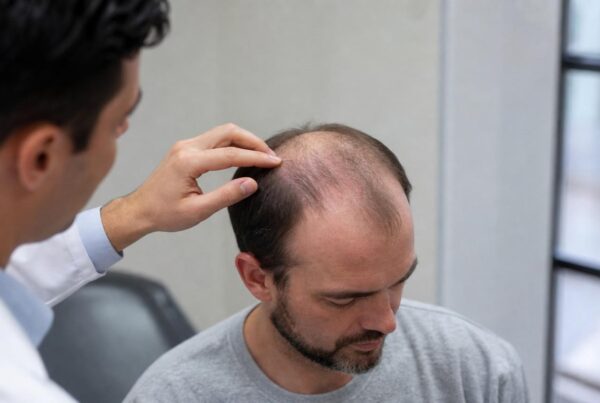
The Hamilton-Norwood scale remains the standard classification system for male pattern baldness, first published in 1975 and still referenced in virtually every hair restoration consultation worldwide. Stage 3 marks the clinical threshold where hair loss transitions from cosmetically minor to visually significant. The frontal hairline has receded symmetrically at the temples, forming a distinctive M-shape, and the recession extends at least two centimeters beyond the original juvenile hairline.
What makes Norwood 3 a critical inflection point is its position on the progression curve. Studies published in Dermatologic Surgery show that roughly 50% of men who reach Norwood 3 before age 30 will progress to Norwood 5 or beyond within 15 years if untreated. That trajectory matters enormously for surgical planning, because a transplant designed for a Norwood 3 pattern can look bizarre on a Norwood 5 scalp if the native hair surrounding the grafted zone continues to thin.
The Difference Between Norwood 3 and Norwood 3 Vertex
The distinction is more than academic: it changes the surgical strategy entirely. Standard Norwood 3 involves recession confined to the frontotemporal region, with the crown remaining largely intact. Norwood 3 vertex adds a separate thinning zone at the crown, creating two independent areas of loss that will eventually merge as the condition advances.
A man with Norwood 3 vertex hair loss needs a fundamentally different graft allocation plan than someone with frontal recession alone. The vertex is a notoriously graft-hungry area: restoring a full crown can consume 2,000 to 2,500 grafts, which is roughly the same number needed for a complete frontal hairline reconstruction. Surgeons who fail to account for vertex involvement risk exhausting the donor supply before the patient’s hair loss has stabilized.
Identifying vertex thinning early requires more than a mirror check. Trichoscopic examination, which uses a polarized dermatoscope at 20x to 70x magnification, can detect miniaturization at the vertex months or years before visible thinning appears. If your consultation does not include this step, the clinic is cutting corners.
Predicting Future Progression and Balding Patterns
Family history is the single strongest predictor of how far your hair loss will go, but it is not the only one. Maternal and paternal patterns both contribute, and the gene pool is polygenic, meaning no single gene dictates outcome. A 2024 meta-analysis in the Journal of Investigative Dermatology identified over 280 genetic loci associated with androgenetic alopecia, confirming that prediction remains probabilistic rather than deterministic.
Practical indicators that suggest aggressive future progression include onset before age 25, diffuse thinning across the mid-scalp in addition to temple recession, and a high miniaturization ratio on trichoscopy (above 20% miniaturized hairs in the frontal zone). Men who show these signs should treat Norwood 3 as a waypoint, not a destination, and plan their treatment accordingly.
Age at onset carries particular weight. A 22-year-old at Norwood 3 has a statistically different future than a 40-year-old at the same stage. The younger patient is far more likely to progress to advanced stages, which means any surgical plan must reserve donor grafts for future procedures.
The Norwood 3 Treatment Decision: Medical vs. Surgical
The most consequential mistake men make at Norwood 3 is framing this as an either-or choice. Medical therapy and surgical restoration are not competitors: they are partners in a long-term strategy. Finasteride and minoxidil stabilize existing hair, while transplantation restores hair in areas where follicles have already been lost. Skipping medication and jumping straight to surgery is like repainting a house with an active termite infestation: the cosmetic fix is temporary if the underlying process continues unchecked.
The 2025 guidelines from the American Hair Loss Association recommend a minimum of 12 months on medical therapy before considering transplantation, specifically to establish whether the patient is a responder and to stabilize the loss pattern. This waiting period also creates a baseline: if hair loss continues despite medication, the surgeon can design a transplant plan that accounts for likely future recession.
Norwood 3 Finasteride vs. Transplant: Stability Before Surgery
Finasteride (1 mg daily) reduces scalp dihydrotestosterone (DHT) by approximately 64%, according to data from Merck’s original Phase III trials. For Norwood 3 patients, this translates to measurable hair count increases in about 83% of users over two years, with the greatest gains in the vertex and mid-scalp regions. The frontal hairline responds less dramatically, which is precisely why transplantation targets the temples while medication defends the crown.
The concept of “stability before surgery” is not arbitrary caution: it is surgical necessity. Grafts transplanted into an unstable scalp environment face two risks. First, native hairs adjacent to the transplanted zone may continue to miniaturize and fall, creating an unnatural gap between the transplanted and native hair. Second, the surgeon cannot accurately determine the final loss pattern, which means the hairline design may be placed too aggressively for the patient’s long-term trajectory.
A practical timeline looks like this: begin finasteride and 5% topical minoxidil at diagnosis, photograph the hairline monthly under consistent overhead lighting, and reassess at 12 and 18 months. If the loss has stabilized or improved, you are a candidate for transplantation. If it has continued to progress despite medication, you may need to adjust the drug protocol (switching to dutasteride 0.5 mg, which reduces scalp DHT by roughly 90%) before proceeding.
Non-Surgical Alternatives for Early Stage Restoration
Not every Norwood 3 patient needs surgery, and some can achieve satisfying cosmetic results through non-surgical means alone, particularly if the thinning is diffuse rather than concentrated at the temples.
- Low-level laser therapy (LLLT) using FDA-cleared devices at 650-670 nm wavelength has shown modest efficacy in clinical trials, with a 2023 systematic review reporting a 15-20% increase in hair density after six months of consistent use.
- Platelet-rich plasma (PRP) injections, administered every four to six weeks for three sessions and then quarterly for maintenance, can improve hair caliber and reduce shedding. The mechanism involves growth factor release from concentrated platelets, triggering a cascade of healing responses at the follicular level.
- Scalp micropigmentation (SMP) creates the illusion of density by depositing pigment dots at the dermal-epidermal junction using needles of 0.25 mm to 0.35 mm diameter. It does not grow hair, but it camouflages visible scalp effectively.
- Keratin-based hair fibers (such as Toppik or Caboki) offer immediate cosmetic camouflage by electrostatically binding to existing hair shafts, thickening their apparent diameter. These work best for diffuse thinning rather than complete baldness.
These options buy time. They do not replace transplantation for patients with significant recession, but they can bridge the gap between diagnosis and surgical readiness.
Strategic Hair Transplant Timing for Norwood 3
Timing a hair transplant is fundamentally a resource allocation problem. The donor area, a horseshoe-shaped band of DHT-resistant follicles at the back and sides of the scalp, contains a finite number of grafts: typically between 6,000 and 8,000 extractable follicular units via FUE for most men. A Norwood 3 hairline restoration requires approximately 1,800 to 2,500 grafts. If the patient eventually progresses to Norwood 5 or 6, the total lifetime graft requirement could reach 5,000 to 7,000. The math is unforgiving.
Pros and Cons of Early Intervention Hair Transplants
Acting at Norwood 3 offers real advantages. The cosmetic payoff is immediate and dramatic because the surrounding native hair provides density that frames the transplanted zone. Fewer grafts are needed compared to later stages, meaning shorter operative time (typically 4 to 6 hours for an FUE procedure) and faster recovery. Psychologically, early intervention prevents the compounding anxiety that comes with watching progressive loss over years.
The risks are equally concrete. A hairline designed for a 28-year-old Norwood 3 may look absurd on the same man at 45 if he progresses to Norwood 6 without sufficient donor reserves to fill the gap. Surgeons call this the “island effect,” where a transplanted frontal hairline sits isolated on an otherwise bald scalp. This outcome is entirely preventable with conservative planning, but it requires a surgeon willing to say no to an aggressively low hairline.
Managing Donor Area Reserves for Future Stages
The best transplant surgeons think in decades, not sessions. A responsible plan for a Norwood 3 patient under 35 typically involves transplanting no more than 2,000 grafts in the first session, focusing on the frontal third and temporal points while leaving the mid-scalp and crown for future procedures if needed.
Donor management also means extraction technique matters. FUE extraction should maintain a harvest rate below 25% of total donor follicles per session to avoid visible thinning in the donor zone. Overharvesting, a practice unfortunately common at high-volume clinics, creates permanent scarring and depletes reserves that cannot be replenished.
Body hair transplantation (BHT) from the chest or beard can supplement scalp donor supply in advanced cases, but these grafts have different growth cycles and caliber. They work as filler, not as primary hairline material.
Evaluating Candidates for a Norwood Type 3 Hair Transplant
Not every man at Norwood 3 is a good surgical candidate, and an honest clinic will turn away patients who are not ready. The ideal candidate profile includes several specific characteristics.
Age plays a central role. Patients over 30 with at least 12 months of documented stability on finasteride or dutasteride represent the lowest-risk group. Younger patients, particularly those under 25, should almost always wait unless their loss has been stable for at least two years on medication and their family history suggests a moderate rather than aggressive pattern.
Donor density is quantifiable. A trichoscopic assessment of the occipital donor zone should show at least 80 follicular units per square centimeter. Below this threshold, the donor area may not support both a current and future procedure without visible depletion.
Realistic expectations matter as much as biology. A Norwood 3 transplant will restore a mature, age-appropriate hairline, not the juvenile hairline you had at 16. Patients who insist on an unnaturally low hairline are setting themselves up for long-term dissatisfaction.
Clinics with strong track records in this space, such as Estenove in Istanbul, typically conduct multi-step evaluations that include trichoscopy, donor density mapping, blood panels (including DHT and testosterone levels), and a detailed family history interview before approving a patient for surgery. If a clinic offers to book your procedure after a 15-minute video call, that is a red flag.
Questions you should ask during any consultation: How many grafts will you extract, and what percentage of my total donor supply does that represent? What is your plan if I progress to Norwood 5? Do you perform the extractions yourself, or does a technician handle part of the procedure? The last question addresses the issue of “ghost surgery,” where the named surgeon is not the person performing the critical steps.
Final Verdict: When to Act and When to Wait
The question of whether to pursue a hair transplant at Norwood 3 or hold off has a clear framework, even if the answer varies by individual. If you are over 30, stable on medication for at least a year, have adequate donor density, and work with a surgeon who plans conservatively, acting now is a strong choice. The cosmetic results at this stage are among the best in hair restoration because you still have native density to work with.
If you are under 28, your loss is still progressing, or you have not yet tried medical therapy, waiting is not weakness: it is strategy. Start finasteride, add minoxidil, track your progress with monthly photos under consistent lighting, and revisit the surgical question in 12 to 18 months.
The worst decision is an impulsive one. A well-timed Norwood 3 procedure with conservative graft allocation can deliver results that last decades. A poorly timed one can leave you with fewer options and a worse cosmetic outcome than doing nothing at all. Choose your surgeon carefully, plan for the long term, and let the data guide the timing.