Every year, more than 1.5 million international patients fly into Istanbul for hair restoration procedures, according to 2025 data from the Turkish Healthcare Travel Council. The number keeps climbing in 2026, and one reason stands out: the all-inclusive package model that Turkish clinics have perfected over the past decade. For someone researching a Turkish hair transplant package and wondering what’s actually included, the sheer variety of offers can feel overwhelming. Some clinics bundle five-star hotels and private chauffeurs; others barely cover the surgery itself. The difference between a well-structured package and a marketing gimmick can mean thousands of dollars in unexpected costs, or worse, a compromised medical outcome. This guide breaks down every component you should expect, explains how pricing really works, and gives you concrete criteria for telling a genuine offer from a hollow one. By the end, you will know exactly what belongs in a credible package and what questions to ask before you book.
Understanding the Turkey Hair Transplant All Inclusive Concept
The all-inclusive model did not emerge by accident. Turkey’s hair transplant industry generates an estimated $1.8 billion in annual revenue, and roughly 70 percent of that comes from international patients. Clinics recognized early that a foreign visitor needs far more than a surgical appointment: they need airport pickup, a hotel room, translation support, post-op medications, and often a follow-up consultation once they return home. Bundling all of these elements into a single price tag removes friction, builds trust, and makes the financial commitment easier to evaluate against alternatives in the UK, Germany, or the United States.
A genuine Turkey hair transplant all-inclusive offer covers three pillars: the medical procedure itself, the logistics of travel and accommodation, and the aftercare protocol. Each pillar has multiple sub-components, and the way a clinic assembles them reveals a lot about its priorities. A clinic that invests in certified anesthesiologists, JCI-accredited operating theaters, and personalized graft planning is signaling something very different from one that leads with “unlimited grafts” and a free sightseeing tour.
The concept also benefits the clinic operationally. By negotiating bulk rates with partner hotels and transfer companies, a high-volume facility can offer competitive pricing while maintaining healthy margins. The patient, in turn, gets a predictable total cost without worrying about taxi fares, pharmacy runs, or surprise consultation fees. When the model works well, it is genuinely efficient for both sides.
Why Clinics Offer Comprehensive Bundles
The primary driver is competition. Istanbul alone has more than 500 clinics offering hair restoration, and the number has grown by roughly 15 percent since 2023. In a market that crowded, a clinic cannot differentiate on surgery alone: patients comparison-shop across countries, not just across clinics. A complete package simplifies the decision-making process and reduces the perceived risk for someone who has never visited Turkey before.
There is also a medical rationale. Clinics that control the entire patient journey, from arrival to departure, can enforce proper pre-operative protocols. They ensure the patient rests in a clean, climate-controlled environment the night before surgery. They control the timing of meals, medication, and hydration. A patient who books their own budget hostel and navigates Istanbul traffic independently is more likely to arrive stressed, dehydrated, or sleep-deprived: all factors that can affect graft survival rates.
From a reputation standpoint, bundling logistics protects the clinic’s online reviews. A patient who had excellent surgery but a terrible hotel experience will often leave a mixed review. By curating every touchpoint, the clinic minimizes variables that could damage its rating on Google, Trustpilot, or Realself.
Comparing Standard vs. Premium Package Tiers
Most reputable clinics offer at least two tiers. A standard package typically includes the surgical procedure (FUE or DHI), local anesthesia, a one- or two-night hotel stay, round-trip airport transfers, a basic medication kit, and a PRP (platelet-rich plasma) session. Prices for this tier in 2026 generally range from $2,000 to $3,500, depending on graft count and the clinic’s reputation.
Premium packages add meaningful upgrades. Expect a four- or five-star hotel for two to three nights, a dedicated patient coordinator who speaks your language, sedation options beyond standard local anesthesia, a sapphire-blade or needle-free anesthesia upgrade, multiple PRP sessions, a comprehensive aftercare kit with specialized shampoos and lotions, and sometimes a virtual follow-up consultation at three, six, and twelve months. Premium pricing typically falls between $4,000 and $7,000.
The gap between tiers is not just about comfort. Premium packages often include a more experienced lead surgeon, lower patient-to-staff ratios on the day of surgery, and extended operating time that allows for more meticulous graft placement. When evaluating tiers, focus less on the hotel star rating and more on the medical specifics: who performs the surgery, how many grafts are planned per session, and what the maximum daily patient volume of the clinic is.
Core Medical Components of a Hair Transplant Package in Turkey
The medical elements are the foundation of any credible package, and they deserve the most scrutiny. A hair transplant package in Turkey should specify the surgical technique, the expected graft count, the qualifications of the operating team, the type of anesthesia, and the post-operative care protocol. If any of these details are vague or missing from the written offer, treat it as a red flag.
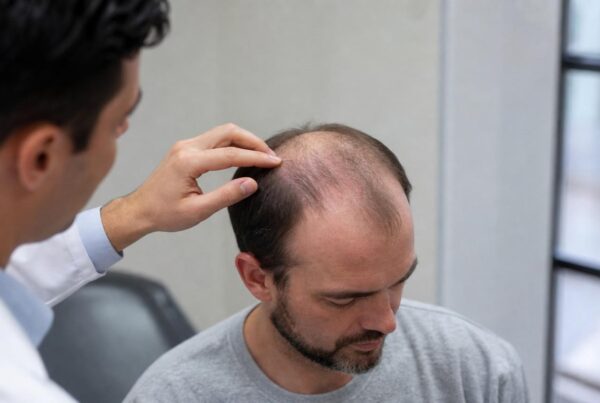
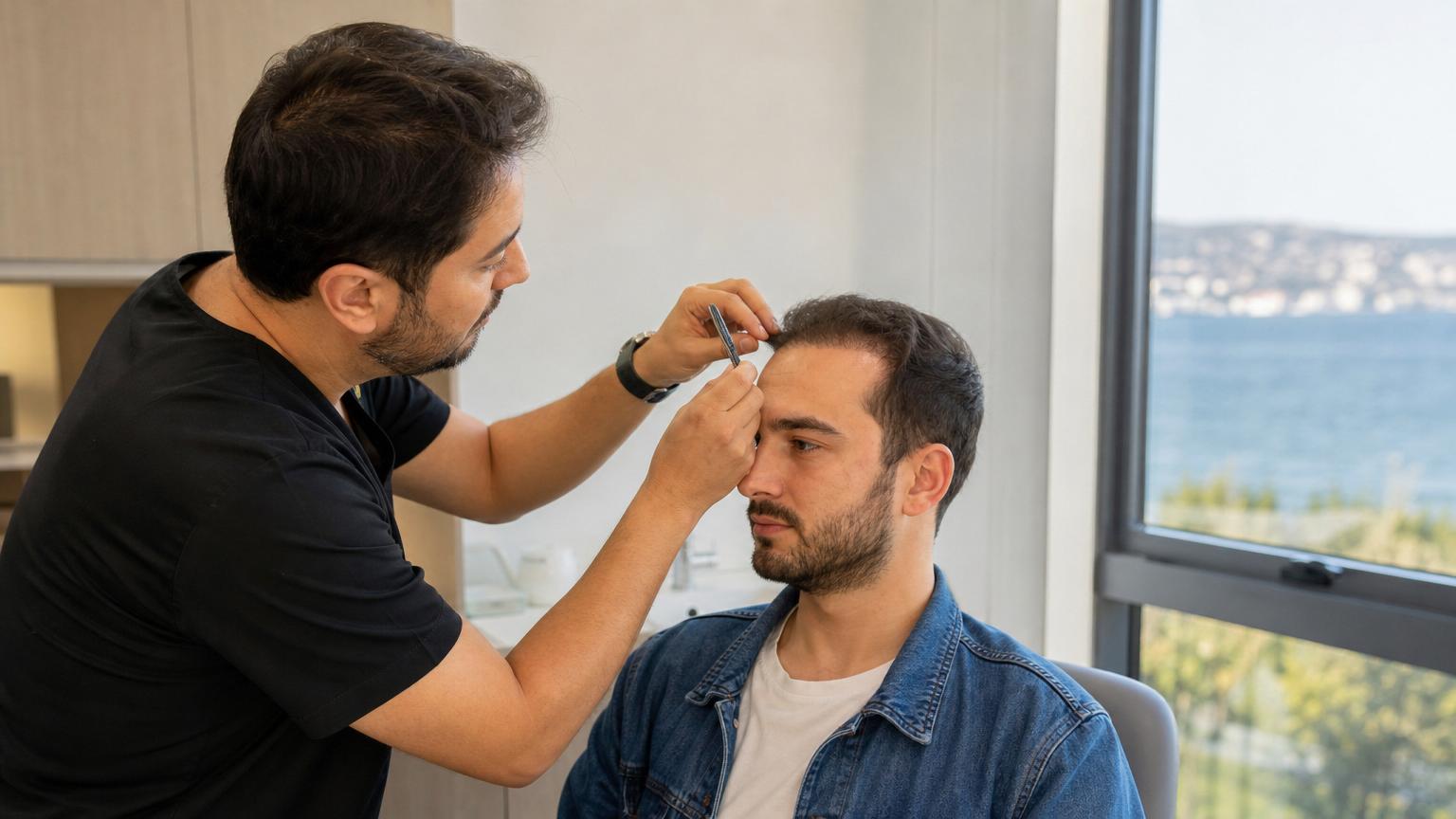
Before the procedure, a reputable clinic will conduct a remote consultation, usually via video call, where a physician examines photos of your donor area and recipient zone. This consultation should produce a preliminary graft estimate, a discussion of realistic expectations, and a written treatment plan. The plan should note the technique (FUE, DHI, or a combination), the estimated number of grafts, the anticipated density per square centimeter, and any limitations based on your donor supply.
On the day of surgery, the clinical team should include a licensed surgeon, at least one surgical technician for every 1,000 grafts planned, and a nurse managing anesthesia and vitals. According to the International Society of Hair Restoration Surgery (ISHRS), a single surgeon should not perform more than one major procedure per day if quality is the priority. Ask the clinic directly: how many procedures does your lead surgeon perform daily?
Surgical Techniques and Graft Counts
FUE (Follicular Unit Extraction) remains the most common method in Turkish clinics. The surgeon uses a micro-punch tool, typically 0.7mm to 0.9mm in diameter, to extract individual follicular units from the donor area at the back and sides of the scalp. Each unit contains one to four hairs. A typical session for moderate hair loss (Norwood 3-4) involves 2,500 to 3,500 grafts, while advanced cases (Norwood 5-6) may require 4,000 to 5,500 grafts across one or two sessions.
DHI (Direct Hair Implantation) uses a Choi implanter pen to simultaneously create the recipient channel and place the graft in a single motion. The pen’s needle is usually 0.6mm to 1.0mm depending on the hair caliber. DHI allows for tighter placement density, often achieving 50 to 60 grafts per square centimeter in the hairline zone, compared to 40 to 50 with standard FUE. This technique is particularly effective for hairline refinement and for patients who want to avoid shaving the recipient area.
Some clinics, including Estenove in Istanbul, offer sapphire FUE, which uses blades made from synthetic sapphire crystal rather than steel. The sapphire blade creates V-shaped micro-channels that are slightly smaller and more precise, which can reduce tissue trauma and promote faster healing. Clinical observations from Turkish dermatology conferences in 2025 suggest that sapphire FUE patients experience 10 to 15 percent less post-operative edema compared to steel-blade FUE, though large-scale peer-reviewed studies are still limited.
Stem cell-enhanced transplants are gaining traction in 2026. The process involves extracting a small sample of adipose tissue or blood, isolating regenerative growth factors, and injecting them into the recipient area during or immediately after graft placement. Early clinical data from the Turkish Society of Plastic Surgery indicates improved graft survival rates of approximately 5 to 8 percent, but the technique adds $500 to $1,200 to the package cost.
Post-Operative Medications and Care Kits
A proper care kit is not a marketing bonus: it is a medical necessity. After surgery, the scalp has thousands of micro-wounds that need protection from infection, inflammation, and desiccation. Your package should include, at minimum, the following:
- A prescribed antibiotic course (typically a 5- to 7-day supply of cephalosporin or amoxicillin-clavulanate)
- An anti-inflammatory medication such as dexamethasone or ibuprofen for the first 48 to 72 hours
- A specialized post-transplant shampoo with a pH between 5.0 and 5.5, free of sulfates and parabens
- A saline-based spray for keeping grafts hydrated during the first 10 days
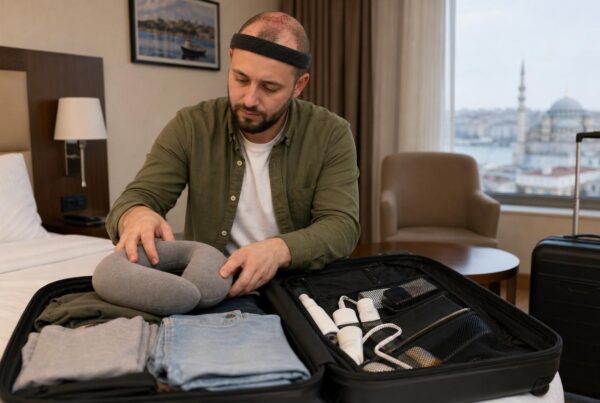
- A neck pillow to encourage sleeping at a 45-degree angle, which reduces swelling
- Detailed written aftercare instructions, ideally in your native language
Premium kits may also include a derma roller (0.25mm to 0.5mm needle length) for use starting at month three to stimulate collagen production around the grafts, a biotin supplement supply for 30 to 90 days, and a topical minoxidil solution (5 percent concentration) to support existing hair retention.
The clinic should schedule a first wash demonstration 48 to 72 hours after surgery, performed by a trained nurse. This session teaches you the exact pressure, water temperature (lukewarm, never hot), and patting technique required to avoid dislodging grafts during the critical first two weeks. If your package does not include this supervised first wash, ask why.
Logistics and Comfort: Hair Transplant Turkey Hotel Transfer
The non-medical components of a package may seem secondary, but they directly affect your surgical outcome. Stress, poor sleep, and logistical confusion can elevate cortisol levels, impair immune response, and compromise healing. A well-organized hair transplant Turkey hotel and transfer arrangement ensures you arrive at the clinic rested, hydrated, and on time.
Istanbul is a city of 16 million people spread across two continents. Traffic between Istanbul Airport (IST) on the European side and clinics in neighborhoods like Sisli, Nisantasi, or Levent can take 45 minutes to two hours depending on the time of day. Clinics that understand this plan their transfer schedules around traffic patterns, not just flight arrival times.
The hotel component matters more than you might expect. After a procedure lasting six to ten hours, you need a quiet, clean room with reliable air conditioning (Istanbul summers regularly exceed 35°C), easy access to room service, and proximity to the clinic for your next-day wash appointment. A hotel that is 40 minutes away in traffic is not “nearby,” regardless of what the brochure says.
VIP Airport Pickups and Local Transportation
Most packages include a round-trip airport transfer in a private vehicle with a driver who speaks at least basic English. The standard is a Mercedes Vito or similar van, which offers enough headroom to avoid bumping freshly operated areas against the ceiling: a detail that matters more than it sounds.
The transfer should cover four trips at minimum: airport to hotel on arrival, hotel to clinic on surgery day, clinic to hotel after surgery, and hotel to airport on departure. Some packages include a fifth trip for the next-day wash appointment. If the wash appointment is at the same clinic and the hotel is a partner property nearby, the clinic may provide a walking escort instead.
Ask whether the transfer service operates 24 hours. Many international flights arrive in Istanbul between midnight and 5 AM. A clinic that only offers transfers during business hours is leaving you to negotiate a taxi at 2 AM after a long flight: not an ideal start to a medical trip.
VIP transfer upgrades may include a meet-and-greet representative inside the terminal who helps with luggage, a welcome kit in the vehicle with water and snacks, and a dedicated WhatsApp line to the driver for real-time coordination. These extras cost the clinic very little but significantly reduce patient anxiety.
Luxury Accommodation and Language Assistance
Partner hotels typically fall into two categories. Standard packages use four-star business hotels in central Istanbul, often in the Sisli or Mecidiyekoy districts, which are 5 to 15 minutes from major clinic clusters. Premium packages may include five-star properties in Taksim, Besiktas, or along the Bosphorus waterfront.
The hotel stay should be a minimum of two nights: one night before surgery for rest and pre-operative preparation, and one night after for recovery and the first wash appointment. Three-night stays are increasingly common in premium packages and allow for a more relaxed recovery window before the flight home.
Language assistance is a critical and often underestimated component. Your patient coordinator should be fluent in your language, not just conversational. They serve as your interpreter during medical consultations, your point of contact for any concerns during recovery, and your guide for understanding aftercare instructions. The best clinics assign a single coordinator to each patient for the entire trip rather than rotating staff. This continuity ensures nothing is lost in translation, especially when discussing medical details like medication dosages or warning signs of infection.
Some clinics also provide a printed city guide with pharmacy locations, halal and non-halal restaurant options, emergency numbers, and directions back to the hotel from the clinic. It is a small touch that reflects operational maturity.
Analyzing the Turkey Transplant Package Cost and Value
The Turkey transplant package cost is, for most patients, the primary reason they choose Istanbul over London, Los Angeles, or Berlin. An equivalent FUE procedure in the UK costs between $8,000 and $15,000. In Germany, prices range from $5,000 to $12,000. In the US, $10,000 to $20,000 is standard for a quality clinic. Turkish packages deliver comparable or superior results at 30 to 60 percent of those prices.
This cost advantage is structural, not a reflection of inferior care. Turkey’s lower cost of living, favorable exchange rate, and enormous patient volume allow clinics to maintain high standards while charging less. A surgeon in Istanbul performing 250 procedures per year can sustain a profitable practice at $3,000 per case. A surgeon in New York performing 80 procedures per year needs to charge $12,000 or more to cover overhead.
The value equation also includes everything bundled into the package. A UK patient paying $10,000 for surgery alone still needs to cover their own hotel, transportation, medications, and follow-up PRP sessions. When you add those costs to a Turkish package, the savings become even more dramatic: often 60 to 70 percent less for a comparable total experience.
That said, price should never be the only factor. A $1,500 “all-inclusive” offer from an unlicensed clinic operating out of a converted apartment is not a bargain: it is a risk. The sweet spot for a credible, well-equipped Turkish clinic in 2026 is $2,500 to $5,000 for a standard-to-premium FUE or DHI package.
Hidden Fees to Watch For in Low-Cost Quotes
The most common hidden fee is the per-graft surcharge. Some clinics advertise a base price for “up to 2,000 grafts” and then charge $0.50 to $1.50 per additional graft. A patient who needs 4,000 grafts could face an unexpected $1,000 to $3,000 add-on at the consultation.
Other fees to watch for:
- PRP sessions listed as “recommended” but not included in the base price (typically $150 to $300 per session)
- Sedation or comfort anesthesia upgrades charged separately ($200 to $500)
- Sapphire blade or DHI Choi pen upgrades priced as add-ons rather than included in the technique fee
- Post-operative medication kits sold at the clinic pharmacy at marked-up prices
- Follow-up consultations billed per session rather than included in the package
- Hotel nights beyond the first night charged at a premium rate
- Travel insurance or medical complication coverage not included
Request a written, itemized quote before committing. The quote should list every component with its individual cost and confirm the total as a fixed, all-inclusive figure. If the clinic resists providing this level of detail, move on.
Another subtle cost trap is the “unlimited grafts” promise. No ethical surgeon offers unlimited grafts because every patient has a finite donor supply. Overharvesting the donor area leads to visible scarring, thinning, and a result that looks worse than the original hair loss. A clinic promising unlimited grafts is either planning to underdose your density or is willing to damage your donor area for short-term volume. Either way, it is a warning sign.
How to Verify What is Included in Your Hair Transplant Package
Verification requires asking specific, sometimes uncomfortable questions. Clinics that welcome scrutiny are the ones worth trusting. Here is a practical checklist for vetting any package offer:
Ask for the surgeon’s full name, medical license number, and membership in recognized professional bodies such as the ISHRS, the European Society of Hair Restoration Surgery (ESHRS), or the Turkish Society of Plastic, Reconstructive and Aesthetic Surgery. Verify these credentials independently through the organization’s online directories.
Request before-and-after photos of at least 20 patients with a similar hair loss pattern and hair type to yours. Photos should show the same patient at pre-op, one month, six months, and twelve months post-op. Be skeptical of portfolios that only show “best case” results or lack consistent lighting and angles.
Confirm the following details in writing:
- The exact surgical technique (FUE, DHI, sapphire FUE, or combination)
- The estimated graft count and the maximum graft count included in the price
- The name and qualifications of the lead surgeon who will perform the extraction and implantation
- Whether technicians perform any part of the procedure and, if so, which parts
- The number of other surgeries scheduled on the same day
- The hotel name, star rating, and distance from the clinic
- The number of nights included and checkout time on departure day
- The exact medications and products in the aftercare kit
- Whether PRP sessions are included and how many
- The process for handling complications, including who to contact and whether corrective procedures are covered
Call the hotel directly to confirm the clinic’s partnership and the room category reserved for patients. This simple step catches clinics that claim five-star accommodation but book standard rooms at three-star properties.
Ask about the clinic’s complication protocol. What happens if you develop an infection after returning home? Does the package include virtual follow-up consultations? Is there a local partner clinic in your home country for emergency referrals? A responsible clinic will have clear answers to all of these questions.
Track your own progress after the procedure. Take monthly photos of your hairline and crown under consistent lighting: same room, same angle, same time of day. This creates an objective record that you can share with your surgeon during follow-up consultations and helps you distinguish normal shedding phases (weeks 2 through 8) from genuine complications.
During the shedding phase, which typically peaks around week four, many patients experience anxiety. This is completely normal and temporary. The transplanted hairs fall out as part of the natural growth cycle, and new growth begins between months three and four. By month six, you should see approximately 60 percent of final density. Full results typically mature between months 12 and 18. If your clinic has not explained this timeline clearly, ask them to walk you through it before surgery.
For cosmetic comfort during the shedding and early growth phases, consider using keratin-based hair fibers to camouflage thin areas. A slightly longer hairstyle on top, around collarbone length for those with longer hair, can also help blend the transplanted zone with surrounding hair. Dry shampoo adds volume and texture to fine regrowth, making the transitional period less visible to others.
Final Considerations Before Booking
A well-structured Turkish hair transplant package removes the guesswork from medical travel, but only if you do your homework before committing. The best packages are transparent, detailed, and medically sound: they prioritize graft survival and patient safety over flashy extras.
Focus your evaluation on the medical credentials first, the aftercare protocol second, and the logistics third. A five-star hotel means nothing if the surgeon is unqualified or the clinic is overbooked. Conversely, a modest hotel paired with a board-certified surgeon and a thorough aftercare plan is a far better investment.