Turkey performs more hair transplant procedures than any other country on the planet. According to the International Society of Hair Restoration Surgery (ISHRS), Turkish clinics account for roughly 25% of all global hair restoration procedures, generating an estimated $1.5 billion in annual medical tourism revenue as of 2025. Two cities dominate that market: Istanbul and Antalya. Each offers a distinct experience, price point, and clinical ecosystem. If you are weighing Istanbul or Antalya for hair surgery, the decision involves far more than picking a dot on a map. It requires an honest look at surgeon credentials, clinic infrastructure, post-operative logistics, and what kind of recovery experience matters to you. The right city depends on your priorities, and this comparison lays out the facts so you can decide with confidence.
Istanbul vs Antalya Hair Transplant: Comparing the Medical Hubs
Turkey’s dominance in hair restoration did not happen by accident. A combination of government-backed medical tourism incentives, a deep pool of trained surgeons, and competitive pricing created a flywheel effect that drew hundreds of thousands of international patients over the past decade. But the country is not monolithic. Istanbul and Antalya represent two fundamentally different approaches to delivering the same medical service.
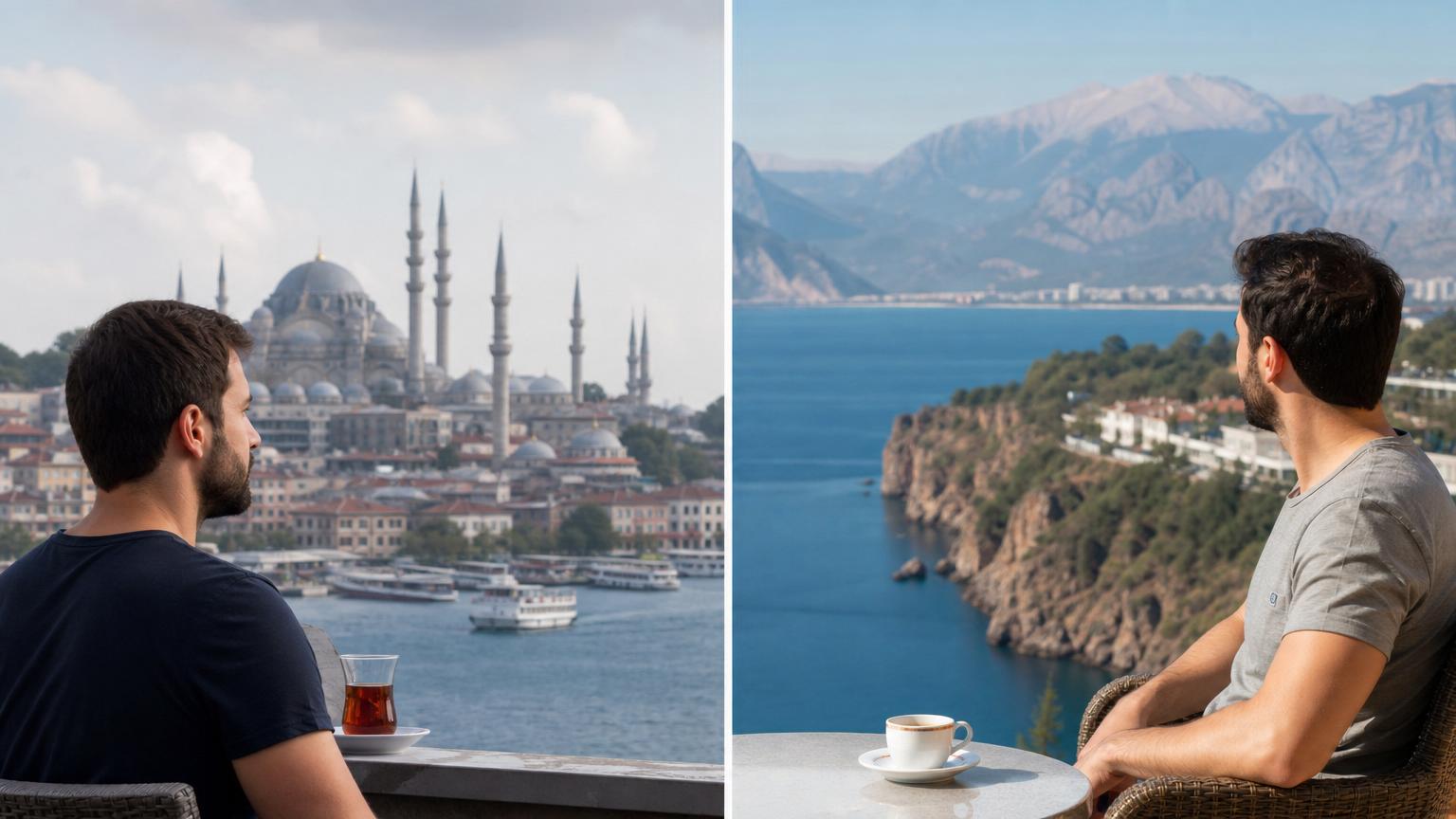
Istanbul is the volume leader: a sprawling metropolis of 16 million people with over 500 clinics offering hair transplant services. Antalya, by contrast, is a Mediterranean resort city of roughly 2.6 million that has positioned itself as a boutique alternative, blending clinical care with a vacation-style recovery. Understanding the strengths and weaknesses of each city starts with understanding what makes them tick.
Istanbul as the Global Epicenter of Hair Restoration
Istanbul’s reputation as the world capital of hair transplantation is built on scale. The city’s Şişli and Nişantaşı neighborhoods alone house dozens of clinics within walking distance of each other, many of them in modern medical complexes equipped with the latest FUE and DHI technology. The Levent and Maslak business districts have also seen a surge in clinic openings, particularly along the metro line that connects to Istanbul Airport (IST), which sits just 35 kilometers from the city center.
That airport matters. Istanbul Airport is one of the busiest hubs in the world, with direct flights from over 300 destinations across Europe, the Middle East, Asia, and North America. For a patient flying in from London, Berlin, or Dubai, getting to a clinic in Istanbul is about as straightforward as air travel gets. Most clinics offer shuttle transfers from the airport, and the ride to Şişli takes roughly 40 minutes outside rush hour.
The sheer number of clinics creates intense competition, which has both upsides and downsides. On the positive side, competition drives innovation. Istanbul clinics were among the first to adopt sapphire-blade FUE, where incision channels are created using blades made from synthetic sapphire at widths as small as 1.0 to 1.3 millimeters, reducing tissue trauma and accelerating healing. Many now offer DHI (Direct Hair Implantation) using Choi pens, which allow grafts to be placed at precise angles of 40 to 45 degrees without pre-made recipient channels. Stem cell-assisted hair transplants, which use growth factors derived from the patient’s own adipose tissue or platelet-rich plasma (PRP), are also increasingly available at top-tier Istanbul clinics.
The downside of scale is quality variance. With 500-plus clinics, not all operate at the same standard. The Turkish Ministry of Health requires clinics to hold accreditation, but enforcement can be inconsistent. Ghost surgery, where an unlicensed technician performs the procedure instead of the named surgeon, remains a documented risk in budget-tier Istanbul clinics. According to a 2024 investigation by the Turkish Medical Association, roughly 15% of inspected clinics in Istanbul showed evidence of non-physician staff performing graft extraction or implantation without direct surgeon oversight.
Patients considering Istanbul should ask pointed questions before booking:
- Will the named surgeon personally perform the extraction and implantation, or will technicians handle parts of the procedure?
- Is the clinic accredited by the Turkish Ministry of Health and JCI (Joint Commission International)?
- How many procedures does the surgeon perform per day? A surgeon handling more than two full procedures daily is likely delegating significant portions to staff.
- Can the clinic provide before-and-after photos of patients with a similar hair loss pattern (Norwood classification) to yours?
Istanbul’s best clinics, including facilities like Estenove, maintain strict protocols where the lead surgeon is involved in every critical phase of the operation. The difference between a top-tier Istanbul experience and a budget one can be dramatic, so vetting is not optional.
Antalya’s Growing Reputation for Boutique Medical Care
Antalya entered the hair transplant market later than Istanbul, but it has carved out a niche that appeals to a specific type of patient: someone who wants a smaller, more personalized clinical environment paired with a comfortable recovery setting.
The city’s medical tourism infrastructure is concentrated in the Lara and Konyaaltı districts, both of which sit along the coastline and are within 15 to 20 minutes of Antalya Airport (AYT). Lara, in particular, has become a hub for medical hotels: properties that combine standard hospitality with on-site nursing staff, post-operative care kits, and PRP treatment rooms. Several clinics operate directly within or adjacent to five-star resort properties, allowing patients to walk from their procedure room to a poolside recovery area.
Antalya’s clinic count is far smaller than Istanbul’s, with roughly 40 to 60 dedicated hair transplant facilities as of 2026. That smaller market means less competition but also less quality variance. Clinics in Antalya tend to operate on a lower-volume model, with surgeons typically performing one procedure per day. This translates to longer appointment times and more direct surgeon involvement in each case.
The city’s appeal is also climatic. Antalya enjoys over 300 days of sunshine per year, with mild winters and warm springs. For patients scheduling their procedure in the October-to-April window, the Mediterranean climate offers a gentler recovery environment than Istanbul’s cold, rainy winters. Post-operative care instructions typically advise patients to avoid direct sun exposure for at least two weeks, but the mild air temperature and low humidity in Antalya’s cooler months can be beneficial for healing.
Antalya does have limitations. Its airport, while well-connected to European cities, has fewer direct long-haul routes than Istanbul. Patients from the United States, East Asia, or South America will almost always need a connecting flight. The city also has a smaller pool of surgeons, meaning fewer options if you want to compare multiple consultations before committing.
Cost and Quality Standards: Finding the Best City Hair Transplant Turkey
Price is often the first filter patients apply, and both cities deliver significant savings compared to Western Europe or North America. A hair transplant in the UK averages £8,000 to £15,000 in 2026. In the United States, the range sits between $10,000 and $20,000 depending on graft count. Turkey offers the same procedures for a fraction of those figures, but the pricing structures differ between Istanbul and Antalya in ways that matter.
Pricing Variations Between Metropolitan and Resort Clinics
Istanbul’s pricing spectrum is the widest in Turkey. At the budget end, all-inclusive packages (procedure, hotel, transfers, PRP session) start as low as €1,500 to €2,000 for a standard FUE transplant of up to 4,000 grafts. At the premium end, top-rated clinics charge €4,000 to €6,500 for the same graft count, with the higher price reflecting surgeon involvement, smaller daily patient volumes, and advanced techniques like sapphire FUE or DHI.
Antalya’s pricing tends to cluster in a narrower band: €2,500 to €5,000 for comparable procedures. The floor is higher because Antalya clinics generally do not compete on ultra-low pricing. Their model is built around the “medical holiday” concept, where the package includes resort-quality accommodation, sometimes for a companion as well, and a more curated recovery experience. Some Antalya packages include daily wound-care check-ins at the hotel, a second PRP session on day three, and even guided city tours during the recovery window.
Here is a general pricing comparison for a standard 3,000-graft FUE procedure in 2026:
| Cost Component | Istanbul (Budget) | Istanbul (Premium) | Antalya (Standard) |
|---|---|---|---|
| Procedure fee | €1,200 – €1,800 | €3,000 – €5,000 | €2,000 – €3,500 |
| Hotel (3 nights) | Included or €50/night | Included (4-star) | Included (4-5 star resort) |
| Airport transfers | Included | Included | Included |
| PRP session | 1 session included | 1-2 sessions included | 1-2 sessions included |
| Post-op care kit | Basic | Comprehensive | Comprehensive |
| Total package | €1,500 – €2,200 | €4,000 – €6,500 | €2,500 – €5,000 |
A critical point: the cheapest option is rarely the best value. Clinics offering sub-€2,000 packages in Istanbul often process four to six patients per day per surgeon. At that volume, significant portions of the procedure are delegated to technicians. The math is straightforward: a 3,000-graft FUE takes six to eight hours when performed carefully. A surgeon cannot do that twice in one day while maintaining precision.
Evaluating Surgeon Expertise and Technology Standards
Price comparisons only matter if the clinical quality is comparable. Here is how to evaluate that, regardless of city.
Surgeon credentials are the single most important variable. In Turkey, hair transplant surgeons should hold a specialization in plastic surgery, dermatology, or a related surgical field. Ask for the surgeon’s diploma number and verify it through the Turkish Medical Association’s online registry. A surgeon with 10 or more years of specific hair transplant experience and a portfolio of 2,000-plus documented cases is a strong indicator.
Technology standards have converged between the two cities. Both Istanbul and Antalya clinics commonly offer:
- FUE with micro-motor extraction using punch sizes of 0.7 to 0.9 millimeters, which minimizes scarring in the donor area
- Sapphire-blade channel opening for recipient sites, creating incisions 10 to 15% smaller than steel blades
- DHI with Choi implanter pens for direct graft placement without pre-made channels, particularly effective for hairline work and increasing density in existing hair
- PRP therapy using double-spin centrifugation to concentrate platelets at 4 to 7 times baseline levels, injected into the recipient area to accelerate follicle survival
- Stem cell-enhanced transplants where stromal vascular fraction (SVF) from adipose tissue is combined with PRP for enhanced graft take rates
The technology gap between Istanbul and Antalya is minimal at the premium tier. Where differences emerge is in ancillary infrastructure. Istanbul’s larger clinics often have on-site laboratories for blood work, dedicated anesthesiology teams, and emergency protocols linked to nearby university hospitals like Istanbul Medipol or Acıbadem. Antalya clinics, being smaller, may rely on partnerships with Akdeniz University Hospital or private facilities in the Lara district for any complications, though serious complications from hair transplants are statistically rare (under 1% for accredited clinics, per ISHRS data).
The Patient Experience: Istanbul or Antalya for Hair Surgery
Beyond cost and credentials, the day-to-day experience of being a patient differs significantly between these two cities. Your recovery period, typically five to ten days before you can resume normal activities, will be shaped by where you spend it.
Combining Recovery with a Mediterranean Vacation in Antalya
Antalya’s strongest selling point is the recovery environment. After a hair transplant, patients need to keep the grafted area clean, avoid strenuous activity for at least ten days, sleep at a 45-degree incline for the first five nights, and stay out of direct sunlight. None of that requires staying in a hotel room.
The Lara Beach strip, where many medical hotels are located, offers a walkable environment with restaurants, cafes, and gentle seaside promenades. Patients recovering in Antalya frequently describe the experience as feeling more like a health retreat than a medical trip. The psychological benefit should not be underestimated: reduced stress during recovery correlates with better healing outcomes, according to research published in the Journal of Wound Care.
A typical Antalya recovery timeline looks like this:
- Day 1 (procedure day): 6-8 hour procedure, return to hotel, light meal, sleep elevated
- Day 2: First post-op check at the clinic (usually 20-30 minutes), gentle wash demonstration, light walking permitted
- Day 3: Optional second PRP session, free time, avoid sun exposure
- Days 4-7: Daily gentle washing of the transplant area using prescribed pH-neutral shampoo, light sightseeing possible (Antalya Old Town, Düden Waterfalls) with a hat for sun protection
- Days 8-10: Scabbing begins to fall off naturally, final clinic check, clearance to fly home
Antalya also works well for patients traveling with a partner or family member. The companion can enjoy the resort, beach, and excursions while the patient recovers. Several clinics offer companion packages that include accommodation and meals at no additional charge.
The downside is isolation from the broader Turkish medical ecosystem. If you want a second opinion or need to switch clinics mid-process, your options in Antalya are limited compared to Istanbul’s vast network.
Logistics and Accessibility in the Turkish Metropolis
Istanbul is not a relaxation destination during recovery. It is loud, crowded, and fast-paced. Traffic between the European and Asian sides of the city can turn a 10-kilometer drive into a 90-minute ordeal. For a patient with a freshly transplanted scalp, navigating Istanbul’s energy can feel exhausting.
That said, Istanbul’s logistical advantages are real. The city’s medical infrastructure is unmatched in Turkey. If any complication arises, even a minor one like excessive swelling or a reaction to anesthesia, you are minutes from a world-class hospital. The density of clinics also means you can schedule in-person consultations with two or three surgeons before committing, something that is much harder to do in Antalya.
Istanbul’s hotel options near major clinic districts are extensive. The Şişli and Nişantaşı areas offer everything from budget-friendly apart-hotels to luxury properties like the Hilton Bomonti or the Marriott Şişli. Many clinics have negotiated rates with nearby hotels, and some operate their own patient guesthouses with nursing staff on call.
For patients who value efficiency over ambiance, Istanbul is hard to beat. You can fly in on a Monday morning, have your consultation and blood work done that afternoon, undergo the procedure on Tuesday, attend your first post-op check on Wednesday, and fly home by Friday. The city’s two major airports, Istanbul Airport on the European side and Sabiha Gökçen on the Asian side, provide flexibility in booking flights.
One practical consideration: Istanbul’s water is hard, with high mineral content that can irritate a freshly transplanted scalp during washing. Most premium clinics provide bottled or filtered water for post-op hair washing, but confirm this in advance. Antalya’s water supply, while also mineral-rich, tends to be slightly softer, and resort hotels often use filtration systems.
Tracking your progress after returning home is straightforward regardless of which city you choose. Take monthly photographs of your hairline and crown under consistent lighting, ideally in the same bathroom with the same overhead light, at the same time of day. Most clinics provide a follow-up schedule:
- Month 1: Shock loss occurs (transplanted hairs fall out; this is normal and expected)
- Months 2-3: Dormant phase; minimal visible growth
- Months 4-6: New growth begins, thin and wispy at first
- Months 8-10: Significant density improvement visible
- Month 12-14: Final results, with full thickness and natural appearance
Both Istanbul and Antalya clinics typically offer remote follow-up via WhatsApp or video call, reviewing your progress photos at each milestone.
Making Your Choice: Antalya Hair Clinic Review and Final Verdict
The decision between Istanbul and Antalya is not about which city is objectively better. It is about which city fits your specific situation.
Choose Istanbul if you prioritize maximum choice, want to compare multiple surgeons in person, need the most accessible international airport connections, or are traveling from outside Europe and want the simplest routing. Istanbul is also the better option if you are considering a complex case: high graft counts (5,000+), repair work from a previous failed transplant, or combined procedures like beard-to-scalp FUE where donor area versatility matters. The city’s top clinics have the volume of experience and surgical teams to handle these cases confidently.
Choose Antalya if you want a calmer recovery environment, prefer a clinic that operates at lower daily volume, are traveling with a companion who wants a vacation experience, or are scheduling your procedure during the cooler months (October through March) when Antalya’s climate is ideal for healing. An Antalya hair clinic review from most patient forums and medical tourism platforms consistently highlights the personalized attention and resort-quality recovery as the primary advantages.
Regardless of city, your vetting process should follow the same checklist:
- Verify the surgeon’s credentials through the Turkish Medical Association
- Confirm the surgeon personally performs extraction and implantation
- Ask how many procedures the surgeon performs per day (one is ideal, two is acceptable, three or more is a red flag)
- Request before-and-after photos of patients with your specific Norwood classification
- Confirm JCI or Turkish Ministry of Health accreditation
- Ask about the specific technique (FUE, sapphire FUE, DHI) and why it is recommended for your case
- Clarify what the all-inclusive package covers and what costs extra
For patients who want the precision of DHI or the innovation of stem cell-assisted transplants in a clinic that limits its daily caseload, facilities like Estenove in Istanbul demonstrate that a metropolitan setting does not have to mean a factory-line experience. The key is selecting a clinic that aligns with your values, not just your budget.
One final thought: the best hair transplant result is the one you cannot tell happened. Whether you recover overlooking the Bosphorus or the Mediterranean, the grafts do not care about the view. They care about the surgeon’s hands, the technique used, and how well you follow post-operative instructions. Focus your energy on those three variables, and the city question answers itself.